Airway-Aware Orthodontics and Myofunctional Dentistry: A Simple Guide
Orthodontics is about more than making the front teeth look straight. A thoughtful assessment also considers how the upper and lower teeth fit together, how the jaws are developing, and whether oral habits or breathing-related concerns deserve a closer look.
That broader perspective is often described as airway-aware orthodontics.
At TOOTHbar in southwest Calgary, airway and oral-function considerations can form part of orthodontic assessment, especially when treating growing children. The idea is not that braces or aligners diagnose or cure breathing disorders. It is that the mouth, teeth, jaws, tongue and surrounding structures do not exist in isolation.
This guide explains what airway-aware orthodontics means, what people mean by myofunctional dentistry, where the evidence is still developing, and when breathing symptoms deserve medical follow-up.

Orthodontic assessment can consider tooth position, bite, growth, oral habits and relevant breathing concerns rather than looking at alignment alone.
In this guide
- The quick answer
- What is airway-aware orthodontics?
- What orthodontics can and cannot tell us about the airway
- Why mouth breathing may come up
- What is myofunctional dentistry?
- What is myofunctional therapy?
- What does the evidence actually say?
- Airway-aware orthodontics for children
- Does this matter for adults?
- How this fits with Invisalign and braces
- When medical referral matters
- TOOTHbar's approach
- Frequently asked questions
Airway-Aware Orthodontics: The Quick Answer
Airway-aware orthodontics is a way of approaching orthodontic assessment that considers more than tooth alignment.
Depending on the patient, the dentist may also pay attention to jaw development, facial growth, tongue posture, lip seal, oral habits, reported mouth breathing or snoring, and other findings that may be relevant to treatment planning or referral.
Orthodontic diagnosis focuses on tooth position, occlusion, available space and craniofacial relationships.
Reported snoring, persistent mouth breathing or certain anatomical findings may justify further questioning or referral.
Tongue resting posture, lip seal, swallowing patterns and other oral functions may be considered when they are relevant.
Suspected obstructive sleep apnea or another medical breathing disorder requires appropriate medical evaluation.
What Is Airway-Aware Orthodontics?
There is no separate dental specialty called "airway-aware orthodontics." The phrase describes a broader treatment-planning perspective.
Conventional orthodontic assessment already considers much more than whether teeth look crooked. The dentist evaluates the bite, jaw relationships, tooth position, growth where relevant, facial proportions and available space.
An airway-aware approach adds attention to reported breathing patterns and oral-function findings when they could be relevant to the overall picture.
Screening is not diagnosis
A dentist can notice signs, ask questions and recognize when a patient's history warrants further investigation.
Conditions such as obstructive sleep apnea require appropriate medical diagnosis. When a concern falls outside routine dental or orthodontic care, referral is part of responsible treatment planning.
What Can Orthodontics Tell Us About the Airway?
Your teeth and jaws provide useful information about growth and craniofacial structure, but they cannot tell the entire story of breathing or sleep.
During an orthodontic assessment, the dentist may observe factors such as jaw relationships, dental arch form, crowding, oral posture and other visible features. Your history may also include questions about mouth breathing, snoring or sleep-related concerns.
Those observations can help determine whether additional evaluation makes sense. They do not by themselves diagnose a sleep-related breathing disorder.
Think of airway awareness as an extra lens
It does not replace orthodontic diagnosis, and orthodontics does not replace medical sleep evaluation. It simply helps make sure potentially relevant signs and symptoms are not ignored while the teeth and bite are being assessed.
Why Does Mouth Breathing Come Up in Orthodontic Conversations?
Persistent mouth breathing is one of the common reasons airway discussions enter dentistry and orthodontics.
Breathing through the mouth can occur for many reasons. Nasal obstruction, allergies, enlarged tonsils or adenoids, habit, anatomy and other medical factors may all play a role.
Research has found associations between chronic mouth breathing and certain dentofacial patterns in growing patients, but the relationship is complex. Seeing crowding or a particular jaw pattern does not prove that mouth breathing caused it.
Persistent mouth breathing deserves a reason, not an assumption
If a child or adult regularly struggles to breathe through the nose, the important question is why. Orthodontic assessment may identify reasons to investigate further, but treatment should reflect the actual cause rather than assuming every mouth-breathing pattern is primarily dental.
What Is Myofunctional Dentistry?
"Myofunctional" refers to the function and resting patterns of muscles around the mouth and face.
In a dental or orthodontic conversation, this may include attention to:
TOOTHbar's current orthodontics page specifically identifies myofunctional dentistry as part of its whole-person approach.
What Is Orofacial Myofunctional Therapy?
Orofacial myofunctional therapy, often shortened to OMT, is different from simply noticing oral habits during a dental examination.
OMT uses structured assessment, education and exercises intended to address selected patterns involving oral posture and function.
Depending on the concern and local scope of practice, myofunctional therapy may involve collaboration among dentists, orthodontic providers, speech-language professionals and other appropriately trained healthcare providers.
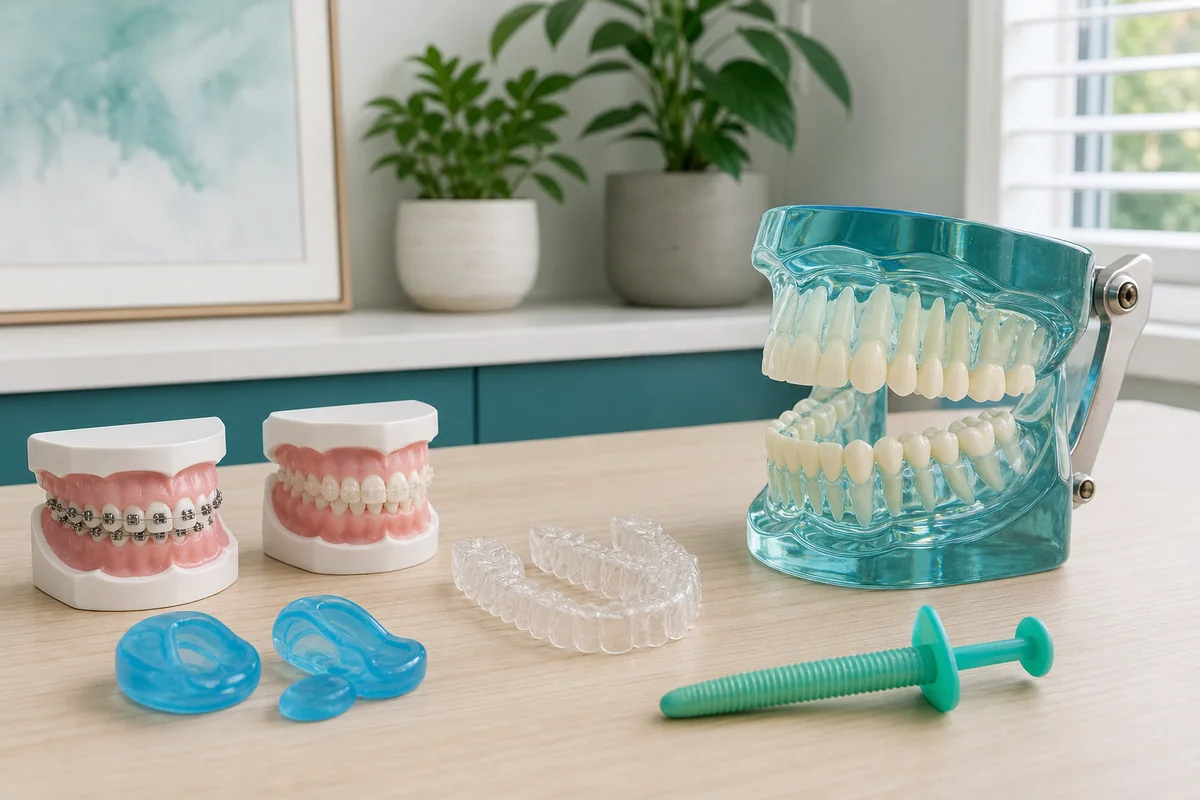
It is not simply "train your tongue and fix your airway"
Tongue posture and oral function can be clinically relevant, but the cause of mouth breathing or sleep-related symptoms needs to be understood. Exercises cannot remove a physical nasal obstruction or substitute for medical evaluation when a medical breathing problem is suspected.
What Does the Evidence Say About Myofunctional Therapy?
The most accurate answer is that the evidence is developing.
Orofacial myofunctional therapy has been studied for issues including atypical swallowing, mouth breathing, lip incompetence, tongue posture and other orofacial myofunctional disorders.
However, reviews of the research have repeatedly noted variation in treatment protocols, outcome measures and study quality.
| Question | What We Can Say Carefully |
|---|---|
| Can oral function matter? | Yes. Tongue, lip and swallowing patterns are part of the functional environment surrounding the teeth and jaws. |
| Is OMT used clinically? | Yes. It is used for selected orofacial myofunctional disorders by appropriately trained clinicians. |
| Does research show potential benefit? | Some studies report improvements in selected functions and habits. |
| Does it guarantee more stable orthodontics? | No. Current evidence is not strong enough to promise improved orthodontic stability for every patient. |
| Does it cure sleep apnea? | It should not be presented as a stand-alone cure or substitute for medical diagnosis and management of obstructive sleep apnea. |
A recent review of evidence on orofacial myofunctional therapy found a growing body of research but continued limitations in the quality and consistency of evidence.
That is why TOOTHbar's approach should remain individualized. Function may be worth assessing, but treatment recommendations should reflect the specific findings rather than assuming every orthodontic patient needs myofunctional therapy.
Why Airway-Aware Orthodontics Often Comes Up With Children
Children are still growing, so orthodontic assessment can include questions that are less relevant once growth is complete.
The dentist may consider tooth eruption, space for permanent teeth, jaw relationships, bite development and oral habits while deciding whether treatment is needed now, later or not at all.
If a parent also reports persistent snoring, mouth breathing or other possible sleep-related breathing concerns, those symptoms deserve attention rather than being treated as simply another orthodontic problem.
Growth, tooth eruption, crowding and jaw relationships can all be assessed orthodontically.
Tongue posture, oral habits and lip posture may be considered when they relate to the clinical findings.
Reported symptoms can prompt additional screening questions and, when indicated, referral.
Suspected sleep-disordered breathing should be evaluated through the appropriate medical pathway.
The American Academy of Pediatric Dentistry policy on obstructive sleep apnea encourages dental professionals to screen children for increased risk and refer to an appropriate medical provider when OSA is suspected.
Is Airway-Aware Orthodontics Only for Children?
No, although growth-related treatment decisions obviously differ between children and adults.
Adults can also have orthodontic concerns alongside mouth breathing, tongue-posture issues, snoring or diagnosed sleep-related breathing disorders.
An adult orthodontic consultation can consider those pieces of history while planning tooth movement. What it should not do is imply that straightening the teeth automatically treats the breathing problem.
Snoring deserves appropriate evaluation too
Snoring is common, but it can also be associated with obstructive sleep apnea. If symptoms raise concern for OSA, medical evaluation is more appropriate than simply assuming the problem can be addressed through orthodontics.
How Does This Fit With Invisalign or Braces?
Airway awareness does not replace orthodontic appliances.
Invisalign, Spark, Damon Ultima and other orthodontic systems are tools used to move teeth. The broader diagnosis and treatment plan determine which tool is appropriate.
An airway-aware assessment simply means the clinician is not viewing the teeth as isolated objects when creating that plan.
Assess the teeth and bite
Understand crowding, spacing, tooth position, occlusion and jaw relationships.
Consider relevant function
Oral posture, habits or breathing-related history may be considered when they have clinical relevance.
Refer when needed
Concerns outside the scope of orthodontic care may warrant assessment by another healthcare professional.
Select the orthodontic tool
Aligners, fixed braces or another orthodontic approach can then be selected according to the actual treatment requirements.
If you are comparing appliances, our Invisalign vs braces guide explains the practical differences in more detail.
When Does Medical Referral Matter?
Airway-aware dentistry works best when everyone stays within the right clinical lane.
A dentist can recognize dental, oral and craniofacial findings and ask questions about symptoms. A dentist may also collaborate with medical providers when something in the history warrants additional evaluation.
A sleep-related breathing disorder such as obstructive sleep apnea is a medical diagnosis.
Collaboration is a strength, not a limitation
Whole-person dentistry does not mean claiming that dentistry can treat every problem in the body. It means recognizing when another discipline needs to be part of the patient's care.
Who Might Want to Ask About an Airway-Aware Assessment?
You do not need to self-diagnose an airway problem before bringing up a concern.
It may be reasonable to mention the airway and oral-function side of orthodontics if you or your child has an orthodontic concern alongside things such as:
None of those findings automatically means you need orthodontic expansion, braces, aligners or myofunctional therapy. They simply provide useful information for the assessment.
Whole-Person Dentistry Without the Big Promises
The strongest version of whole-person dentistry is not the one that claims every dental treatment will improve your overall health.
It is the one that looks carefully at connections, asks better questions, uses appropriate evidence and knows when collaboration is needed.
TOOTHbar's holistic, whole-body dentistry philosophy fits well with that approach. Oral health, function, comfort and the patient's broader health history can all be part of the conversation without turning an orthodontic appliance into a treatment for an unrelated medical condition.

Airway-aware orthodontics is ultimately about gathering a more complete picture before deciding what treatment, if any, is appropriate.
Airway-Aware Orthodontics at TOOTHbar
TOOTHbar's current orthodontics program includes adult and pediatric treatment, Invisalign, Damon Ultima, Spark, digital records and an explicitly stated interest in myofunctional and airway-related considerations.
For Dr. Murray Knebel, that means an orthodontic conversation can extend beyond the cosmetic position of the teeth when the patient's history or examination makes a broader discussion relevant.
The goal is still straightforward: understand your teeth, bite, growth or oral function, explain the treatment options clearly, and co-create a plan that makes sense for the person in the chair.

Not every airway conversation ends with treatment
Sometimes the useful result of an assessment is reassurance. Sometimes it is orthodontic treatment. Sometimes it is monitoring growth. And sometimes the right next step is referral to another healthcare professional.
You can learn more about orthodontics at TOOTHbar or start with a free virtual dental consultation if you want to ask a few questions first.
Frequently Asked Questions About Airway-Aware Orthodontics
What is airway-aware orthodontics?
Airway-aware orthodontics is an approach to orthodontic assessment that considers tooth position and bite while also paying attention to relevant factors such as craniofacial development, oral posture, mouth breathing, snoring or other breathing-related history. It does not mean orthodontics can diagnose or treat every airway condition.
Can orthodontics cure sleep apnea?
Orthodontic treatment should not be described as a universal cure for obstructive sleep apnea. OSA is a medical condition that requires appropriate diagnosis. Dental and orthodontic care may form part of multidisciplinary management in selected patients, but treatment depends on the individual diagnosis.
What is myofunctional dentistry?
In dentistry, myofunctional considerations generally involve oral posture and function, including tongue resting position, lip seal, swallowing patterns and related oral habits. These factors may be considered when they are relevant to dental or orthodontic findings.
What is orofacial myofunctional therapy?
Orofacial myofunctional therapy uses structured assessment, education and exercises intended to address selected oral posture or functional patterns. It may be used by appropriately trained clinicians and sometimes forms part of multidisciplinary care.
Does myofunctional therapy make orthodontic results last longer?
Research is still developing. Some studies suggest possible benefits for selected oral functions and orthodontic situations, but current evidence is not strong enough to promise improved long-term orthodontic stability for every patient.
Is airway-aware orthodontics only for children?
No. Breathing-related history and oral function can be relevant at different ages. Growth makes some considerations particularly important in children, while adult orthodontic treatment can also take relevant breathing or functional concerns into account.
Does mouth breathing mean my child needs orthodontic treatment?
No. Persistent mouth breathing can have several possible causes and should not automatically be treated as an orthodontic problem. An orthodontic assessment may be useful when dental or jaw-development concerns are also present, while investigation of the reason for persistent mouth breathing may require medical evaluation.
Can airway-aware planning be used with Invisalign or braces?
Yes. Airway awareness refers to the broader assessment and treatment-planning perspective. Invisalign, Spark, Damon Ultima or another orthodontic appliance may still be used when it is appropriate for the tooth movements and bite correction required.
Curious whether the airway side of orthodontics matters for you?
Start with an assessment rather than an assumption. TOOTHbar can look at your teeth, bite and orthodontic goals while also discussing relevant oral-function or breathing concerns. If something needs medical investigation outside dentistry, that can become part of the next-step conversation too.
TOOTHbar is a family-owned dental studio led by Dr. Murray Knebel in southwest Calgary. Book an orthodontic visit online, start with a free virtual consultation, or call the studio at 403-246-1002.