How Much Does Teeth Whitening Cost in Calgary?
It usually starts with a photo. A wedding picture, a LinkedIn headshot, a candid shot where your smile looked a little less bright than you remember. Then comes the search: how much does teeth whitening cost in Calgary, and is it worth it?
Here is the straight answer on pricing, followed by the reframe that actually matters. Whitening is not really a one-off cosmetic purchase. Done properly, it is one piece of a smile maintenance plan, and it works best, and lasts longest, on a healthy, regularly maintained smile. The reader comparing prices is a future long-term patient, and this post treats you that way.
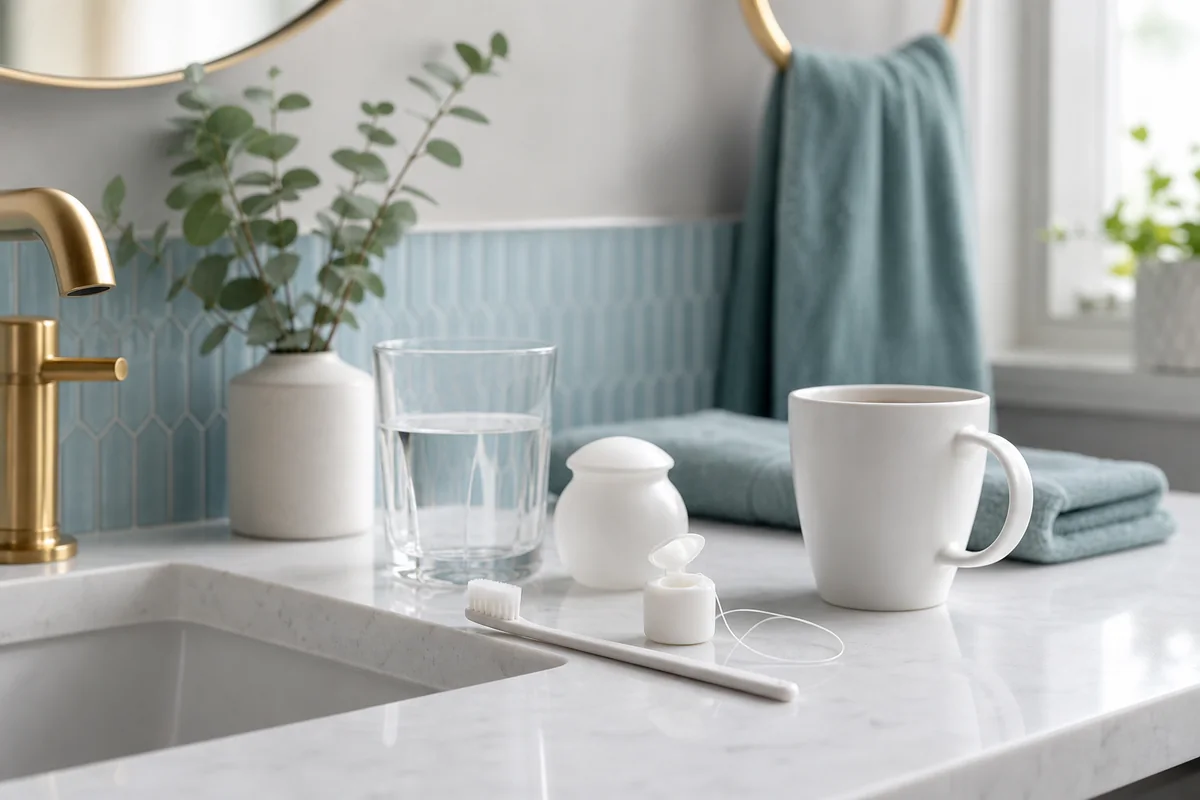
Professional whitening resets your shade. The right aftercare keeps it bright between hygiene visits.
Teeth whitening cost in Calgary: the real numbers
Professional teeth whitening in Calgary typically falls into these ranges:
In-office professional whitening: $400 to $800
The single-visit treatment performed at the dental studio, where a professional-strength whitening agent is applied under controlled conditions. Results are visible the same day, often several shades brighter in about an hour.
Take-home professional kits (custom trays): $200 to $500
Your dentist takes impressions and provides custom-fitted trays with professional-grade whitening gel for use at home over one to two weeks. More gradual than in-office, with excellent control over the final shade.
Over-the-counter strips and kits: $30 to $80
Widely available and inexpensive, but with weaker active ingredients, one-size-fits-all trays, and no professional assessment of whether your teeth and gums are suitable candidates.
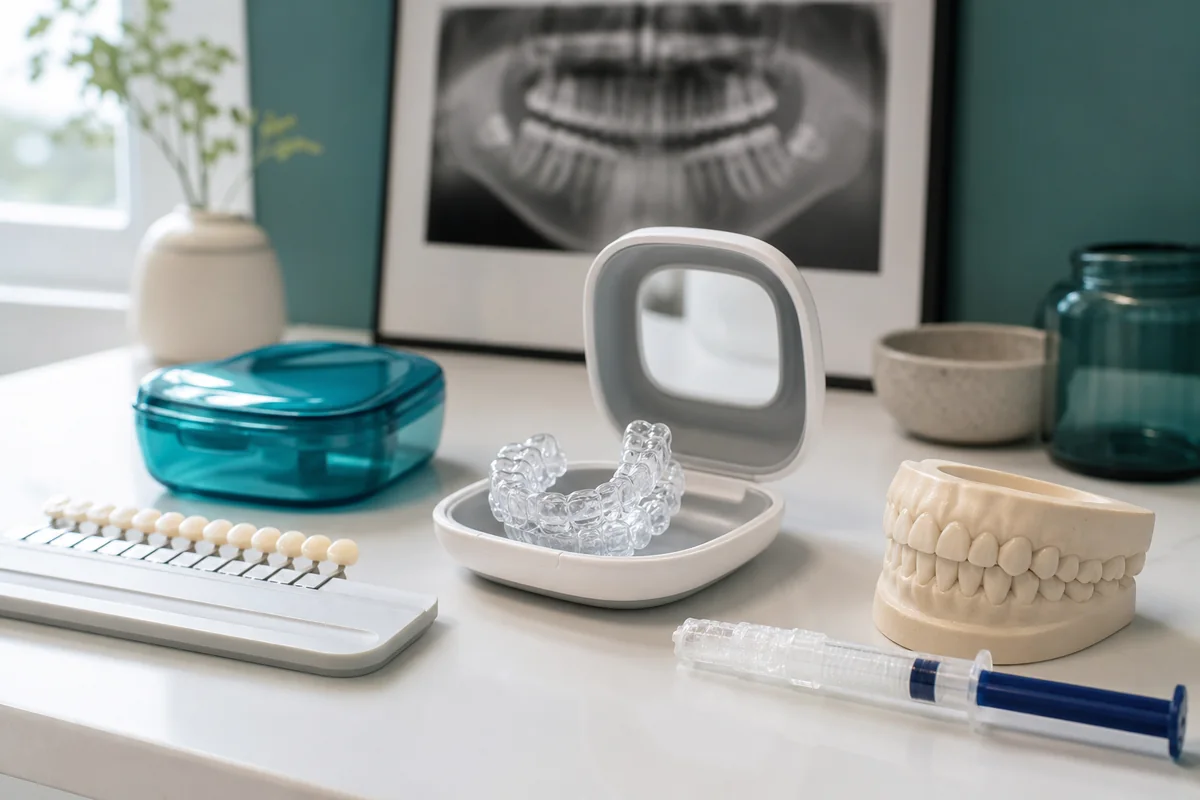
Custom whitening trays are fitted to your teeth, so the professional-grade gel works evenly, with less waste and less irritation.
The honest comparison is not just price. It is price plus safety plus result. Professional whitening includes an assessment first: are your teeth healthy enough to whiten, is there decay or gum disease that should be addressed first, and what result is realistic for your specific staining? That assessment is worth more than the price difference suggests, because whitening over untreated problems is money spent in the wrong order.
What affects the price
Several factors move the number within those ranges:
Be wary of prices that seem dramatically below the professional range. Extremely cheap whitening sometimes means diluted products, rushed application, or no assessment at all.
Why whitening lasts longer with regular preventive care
Here is the part most whitening pages skip, and it is the most useful thing in this post.

Coffee, tea, and red wine are the usual suspects behind surface stains that gradually dull whitening results.
Whitening does not change your teeth permanently. It resets the shade, and then life resumes: coffee, tea, wine, curry, time. How long the result lasts depends enormously on what happens after the appointment.
Patients in a regular preventive rhythm keep their whitening results significantly longer. The mechanics are simple. Professional hygiene visits remove the surface stain and tartar that dull brightness between whitenings. Polishing at those visits maintains the smooth enamel surface that reflects light well. And because your dentist sees you regularly, touch-up whitening can be timed sensibly rather than repeated from scratch every year or two.
The car analogy
Think of it this way: whitening without preventive care is like detailing a car you never wash. It looks remarkable for a week. Whitening inside a preventive plan is maintenance. The brightness becomes the steady state, not the occasional event.
This is also why TOOTHbar discusses whitening as part of a broader conversation rather than a standalone transaction. If your hygiene is overdue, the honest recommendation is hygiene first, whitening second. The result will be better, and it will last longer.
Sensitivity: the honest discussion
Temporary sensitivity is the most common side effect, and it is usually manageable.
The most common side effect of whitening is temporary tooth sensitivity, and you deserve a frank explanation. Professional whitening can cause sensitivity during and shortly after treatment, particularly for patients with thin enamel, gum recession, or existing sensitivity.
A professional assessment identifies this risk beforehand. Desensitizing protocols, adjusted gel strength, and custom tray design all reduce it substantially. Over-the-counter products offer none of this calibration, which is why sensitivity complaints cluster around unsupervised whitening.
If you already experience sensitivity, mention it at your consultation. It does not necessarily rule whitening out. It just means the approach should be planned around it.
Whitening as one piece of a co-created smile plan
Step back and look at whitening the way a holistic studio does: as one element among several that together create the smile you want.
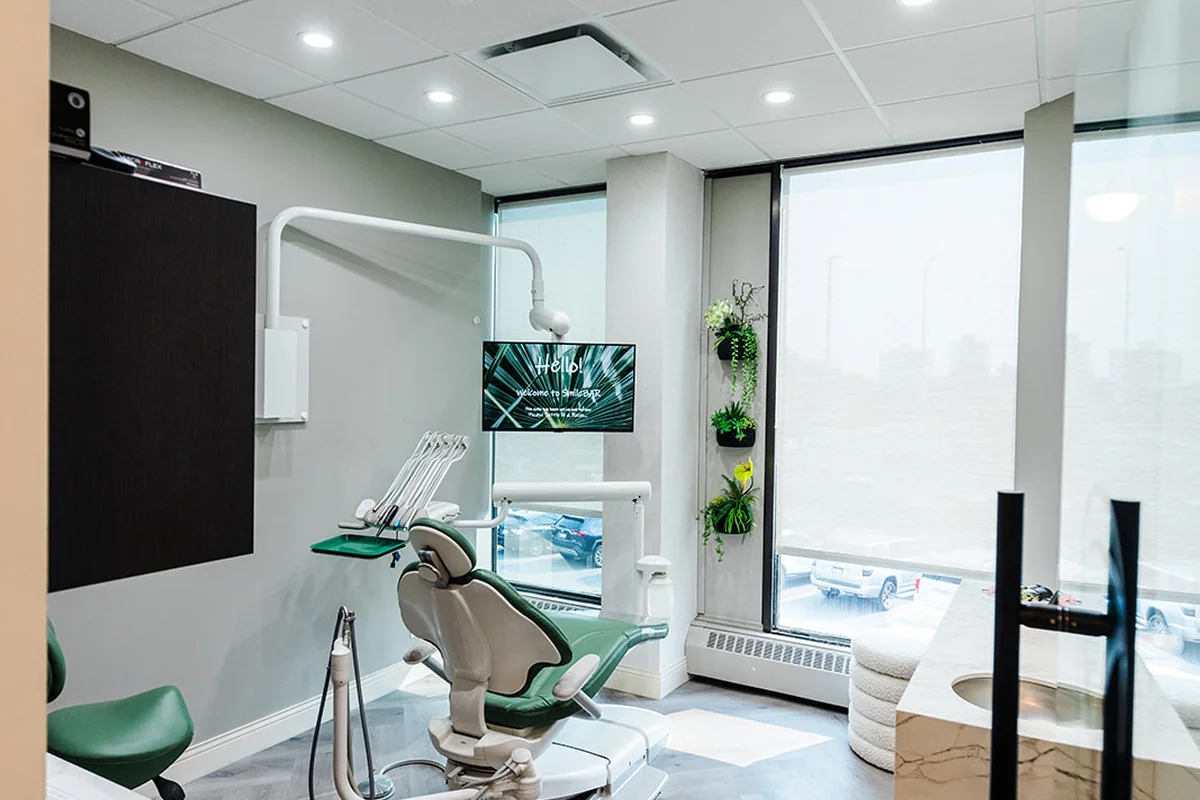
Your whitening plan starts with an assessment at the studio, so the approach fits your teeth, not just the product.
A plan you build together
Maybe the plan is hygiene and whitening this season, with orthodontic alignment discussed for next year. Maybe it is whitening plus replacing an old, discoloured filling so the shade matches throughout. Maybe it is simply whitening maintained by your regular preventive rhythm. The point is that the plan is co-created with you, sequenced sensibly, and aimed at the long term.
Nobody needs whitening. But many people want it, and wanting a brighter smile is a perfectly good reason to start a conversation with a dental studio that will treat the whole picture, not just sell the session.
Related reading
Frequently asked questions
How white can my teeth actually get?
There is a natural limit determined by your enamel and dentin. Most patients achieve several shades of improvement. An ethical provider will assess your teeth and tell you what is realistic before treatment, rather than promising a specific shade.
How long does professional whitening last?
Typically one to three years, depending on diet, habits, and maintenance. Patients with regular preventive hygiene visits and occasional touch-ups maintain brightness far longer than those who whiten once and disappear.
Is teeth whitening safe for enamel?
Professional whitening, properly administered after an assessment, is considered safe for enamel. The risk profile rises with unsupervised over-the-counter use, which is why the pre-whitening assessment matters.
Can I whiten if I have crowns, veneers, or fillings?
Whitening agents work on natural tooth structure, not on restorations. If you have visible crowns or large fillings, whitening may create a shade mismatch. This is exactly the kind of thing a consultation catches, and your dentist can plan around it.
What about whitening toothpastes?
They remove surface stain through mild abrasion but do not change the intrinsic shade of your teeth. Fine for maintenance between professional treatments, not a substitute for them. Some are more abrasive than others, so ask your hygienist for a recommendation.
Your next step
If you are comparing whitening prices, add one more comparison: which studio treats whitening as part of your long-term smile health. Book a consultation at TOOTHbar, or start with a free virtual consultation to discuss your goals. You will get an honest assessment, transparent pricing, and, if you want it, a whitening plan inside the preventive rhythm that keeps the result bright for the long term.
TOOTHbar is a family-owned dental studio led by Dr. Murray Knebel in southwest Calgary. Book an appointment online, start with a free video consultation from home, or call the studio at 403-246-1002.