Invisalign vs Braces: An Airway-Aware Perspective
When most people compare Invisalign and braces, the conversation is about straightness. Which is faster, which is less visible, which costs less. Those are reasonable questions, but they miss the more important one. At TOOTHbar, orthodontic planning starts somewhere else entirely: with how you breathe and sleep.
This is the airway-aware perspective, and it changes how you should think about straightening teeth, whether you are considering treatment for yourself or your teenager.

At TOOTHbar, orthodontic planning starts with how you breathe and sleep, not just how straight your teeth are.
What "airway-aware" actually means
In plain language, airway-aware orthodontics means planning tooth movement around breathing function, not just tooth position.
Your airway is the passage through which air travels to your lungs, and its size and shape are influenced by the development of your jaws, the position of your tongue, and yes, the alignment of your teeth. A narrow upper jaw can mean a narrow nasal airway. A tongue that rests low instead of against the palate can contribute to mouth breathing. Crowded teeth are sometimes a visible sign of jaws that did not develop enough room, and that same underdevelopment can affect breathing during sleep.
The fuller question
An airway-aware approach looks at all of this before deciding how teeth should move. The question is not only "how do we straighten these teeth" but "how do we position these teeth and jaws to support healthy breathing, and what does that mean for sleep and long-term health."
This is not a fringe idea. The connection between craniofacial development, airway, and sleep-disordered breathing is well established in dental and sleep medicine. What is less common is a general dental studio that screens for it routinely and plans orthodontics with it in mind.
Why TOOTHbar screens airway at regular checkups
Here is something most patients do not expect: at TOOTHbar, airway screening is part of the standard preventive visit, not something reserved for an orthodontic consultation.
The reason is simple. The signs are visible long before anyone thinks about braces. A hygienist or dentist can observe mouth breathing habits, tongue posture, jaw development in children, wear patterns from grinding, and scalloped tongue edges, all in the course of a routine exam. Catching these signs early means options are widest. In a growing child, guiding jaw development can influence airway development for life. In an adult, understanding the airway picture informs better orthodontic planning.
This is preventive health in its truest form.
Noticing the upstream pattern before it becomes the downstream problem.
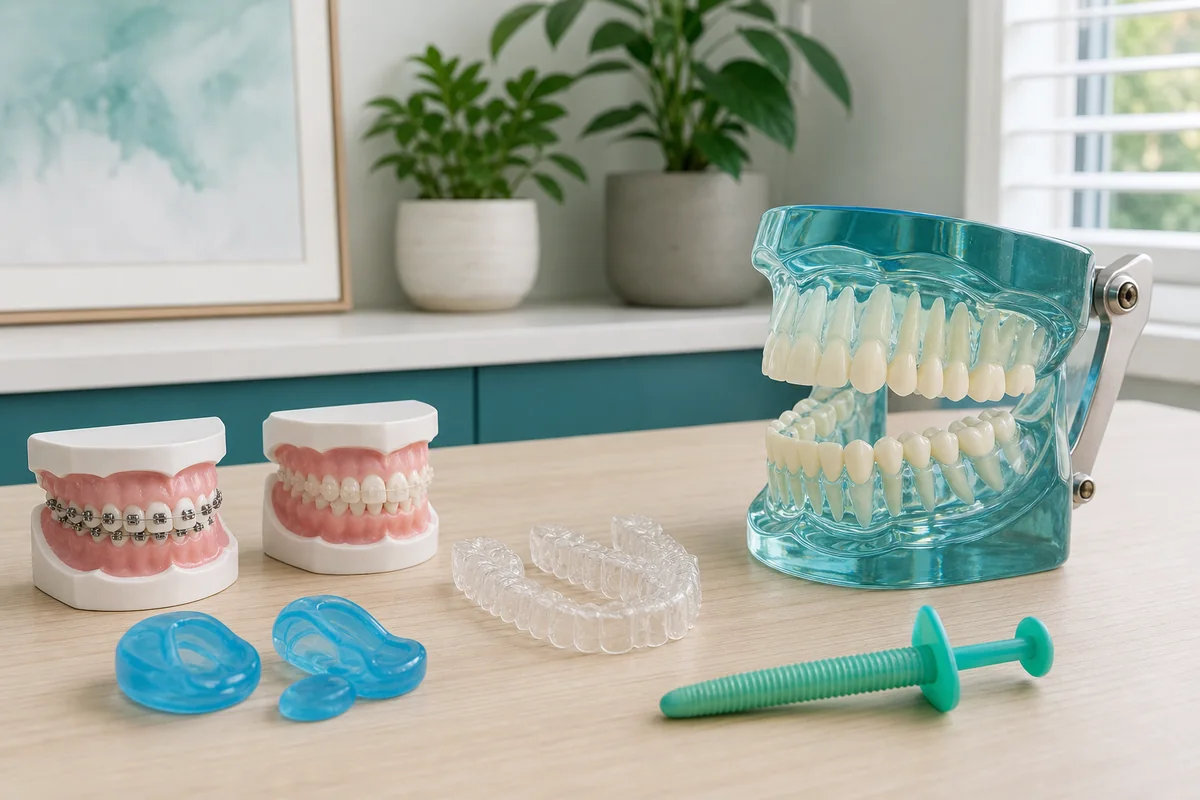
In a growing child, guiding jaw development can influence airway development for life, which is why early airway screening matters.
The breathing, sleep, and alignment connection
To understand why airway matters in orthodontics, it helps to see the chain.
Breathing shapes sleep
How you breathe during the day and night affects your sleep quality. Fragmented sleep, even when you do not fully wake, affects daytime energy, concentration, mood, and over the long term, cardiovascular and metabolic health. In children, poor sleep quality can show up as behavioural and attention difficulties that look like something else entirely.
Tooth and jaw position shape the airway
Tooth and jaw position influence the airway. Orthodontic treatment moves teeth and can influence jaw position. Therefore orthodontic treatment planned without considering the airway can miss an opportunity, or in some cases, work against breathing function.
Airway-aware planning aims for both
Treatment planned with the airway in mind aims for an outcome where the teeth are straight and the breathing is supported.
Neither Invisalign nor braces is automatically the "airway" choice. What matters is the planning philosophy behind them. That said, the two options differ in ways worth understanding.
Invisalign: the clear aligner option
Invisalign uses a series of custom clear trays to move teeth gradually. Its advantages are well known: the trays are nearly invisible, removable for eating and cleaning, and generally comfortable.
From an airway-aware perspective, Invisalign planning at TOOTHbar considers arch development and tongue space alongside alignment. Because the trays are changed weekly and progress is digitally planned from the start, there is precision in how the final tooth positions relate to the airway picture.
Invisalign suits teens and adults with mild to moderate alignment concerns who will reliably wear the trays twenty to twenty-two hours a day. Compliance is the treatment. Forgetting the trays in a drawer is the most common reason Invisalign underperforms, and honest self-assessment matters here.
Invisalign at a glance
Nearly invisible, removable clear trays, changed weekly and digitally planned from the start. Best for mild to moderate alignment concerns. The catch: the trays must be worn twenty to twenty-two hours a day, and compliance is the treatment.
Braces: the fixed option
Traditional braces, ceramic or metal, use brackets and wires to move teeth. They work around the clock without any compliance requirement, which makes them the reliable workhorse for complex cases: significant crowding, bite discrepancies, rotations that need precise control.
From an airway-aware perspective, braces give your dental team continuous, fine-grained control over tooth movement, which can be valuable when the treatment plan includes arch development or bite correction tied to breathing function. Modern braces are smaller and more comfortable than their reputation suggests.
Braces suit complex cases, younger teens who may not manage aligner compliance, and anyone whose treatment plan needs the kind of control only fixed appliances provide.

Retainers protect the result once active treatment ends, whether you chose braces or Invisalign.
Braces at a glance
Fixed brackets and wires that work around the clock with no compliance requirement. The reliable workhorse for complex cases: significant crowding, bite discrepancies, and rotations that need precise control.
So which one? The honest answer
The honest answer is that the right choice depends on your teeth, your airway picture, your lifestyle, and your goals, and it cannot be determined from a blog post. What can be determined here is the framework for the decision.
Ask not just "which is faster or cheaper" but "which approach, in my specific case, gives me straight teeth and supported breathing."
A practice that plans both options through an airway-aware lens will recommend based on that fuller picture. Sometimes that is Invisalign. Sometimes it is braces. Sometimes it is a phased approach. The recommendation should come with an explanation you understand, because you are co-creating this plan, not receiving a verdict.
One more consideration for parents
Timing matters. Because jaw development influences airway development, an airway-aware assessment in childhood, even before any orthodontic treatment begins, can identify whether early guidance would help. This is one of the strongest arguments for bringing children to a studio that screens airway routinely. The window for guiding growth is open only while they are growing.
Orthodontics as preventive health
Step back and notice what has happened in this post. Orthodontics has moved from a cosmetic category to a health category. That is deliberate, and it reflects how TOOTHbar thinks about it.
Straightening teeth is never only about appearance. It is about how the teeth function, how the jaws relate, how the patient breathes and sleeps, and how all of that compounds over a lifetime. Framed that way, orthodontic treatment for a teenager is preventive health: setting up the airway, the bite, and the smile for the decades ahead. For an adult, it is the same, with the added dimension that adult treatment often pairs with the preventive care relationship already in place.
Related reading
Frequently asked questions
What does airway-aware orthodontics mean in simple terms?
It means your orthodontic plan considers your breathing and airway, not just the position of your teeth. The goal is straight teeth and healthy breathing function together.
Is Invisalign or braces better for airway?
Neither is automatically better. What matters most is the planning philosophy. An airway-aware practitioner evaluates your airway picture first, then recommends whichever appliance serves both alignment and breathing in your case.
At what age should my child have an airway assessment?
Early. Since jaw development affects airway development, an assessment during childhood, while growth can still be guided, offers the most options. TOOTHbar includes airway screening in routine preventive visits, so it happens naturally.
I am an adult. Is it too late for airway-aware orthodontics?
Not at all. Adults benefit from airway-aware planning too. While guiding jaw growth is a childhood window, optimizing tooth position, bite, and tongue space for breathing is valuable at any age.
Does TOOTHbar provide the orthodontic treatment directly?
TOOTHbar offers Invisalign and braces options for teens and adults, planned with the airway-aware approach described here. Complex cases are managed with the same philosophy, and you will always understand the why behind the recommendation.
If you are considering orthodontic treatment, for yourself or your child, start with the fuller picture. Book an orthodontic consultation at TOOTHbar, or begin with a free virtual consultation to discuss your situation from home. Either way, you will get an airway-aware assessment and a plan you co-create, aimed at straight teeth and healthy breathing for the long term.
TOOTHbar is a family-owned dental studio led by Dr. Murray Knebel in southwest Calgary. Book an appointment online, start with a free video consultation from home, or call the studio at 403-246-1002.