Dental Cleanings in Calgary: A Gentler Clean With AIRFLOW
If the words "dental cleaning" still make you think about scraping, cold water and sensitive teeth, modern hygiene can feel surprisingly different.
At TOOTHbar in southwest Calgary, the hygiene team uses EMS AIRFLOW technology as part of a Guided Biofilm Therapy approach. Instead of treating every surface the same way from beginning to end, the process identifies biofilm, targets it with an air-powder-water spray, and uses additional instrumentation only where it is clinically needed.
The result is a modern approach to preventive care designed around thorough biofilm management, clear patient education and a more comfortable experience.
This guide explains what a professional dental cleaning actually removes, how AIRFLOW and Guided Biofilm Therapy work, what the technology can and cannot replace, and how often you may need to come back.
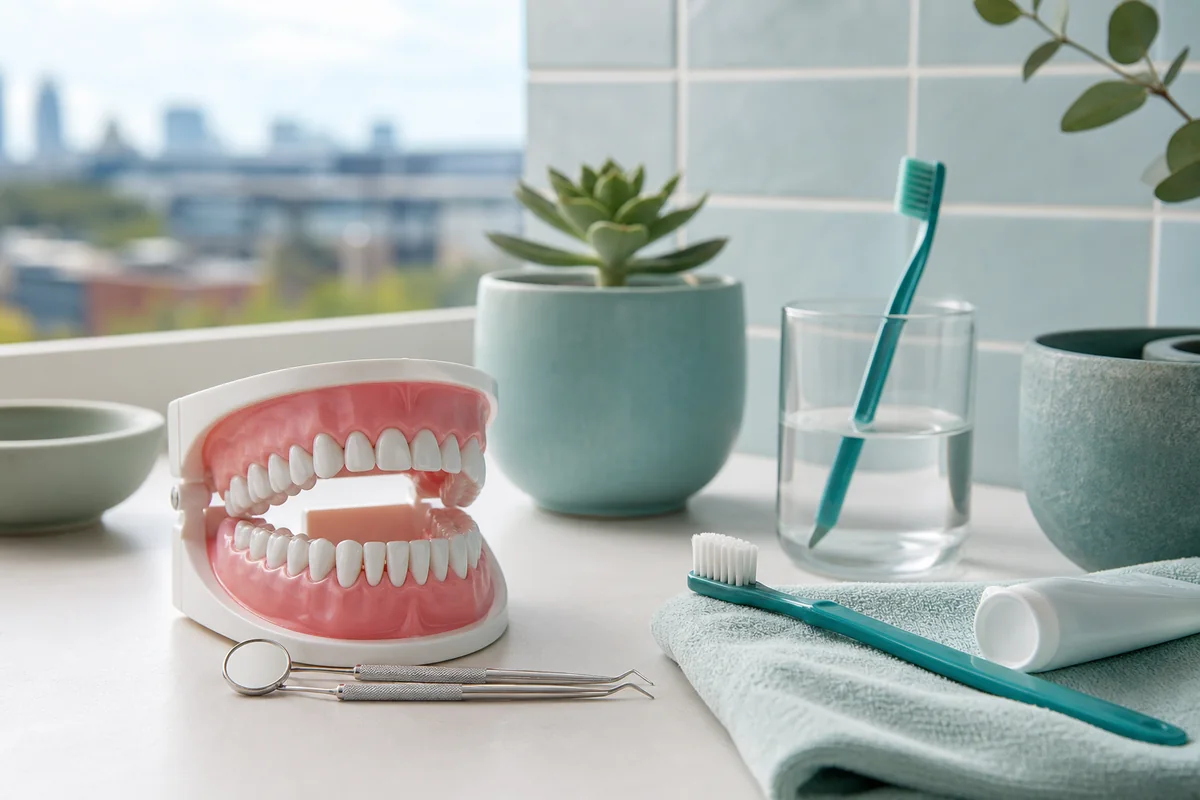
Modern preventive dentistry focuses on removing biofilm and calculus while keeping the experience as comfortable and individualized as possible.
In this guide
- Why professional dental cleanings still matter
- What dental biofilm actually is
- What is AIRFLOW?
- What is Guided Biofilm Therapy?
- How an AIRFLOW cleaning works
- AIRFLOW vs a traditional dental cleaning
- Why AIRFLOW may feel gentler
- AIRFLOW around braces, implants and restorations
- Does AIRFLOW remove stains?
- How often should you have a dental cleaning?
- The TOOTHbar cleaning experience
- Frequently asked questions
Why Professional Dental Cleanings Still Matter
Brushing and cleaning between your teeth at home are the foundation of good oral hygiene, but there are still areas that can be difficult to reach consistently.
Plaque is a sticky bacterial film that develops on teeth every day. When plaque is not adequately removed, minerals in saliva can cause it to harden into calculus, commonly called tartar.
Once calculus has formed, a toothbrush and floss cannot simply brush it away. Professional cleaning allows a dental hygienist to identify these deposits and remove them with the appropriate equipment.
Brushing and cleaning between the teeth help disrupt plaque before it matures and hardens.
Professional hygiene can remove accumulated calculus, identify areas you are missing and help monitor gum health.
What Is Dental Biofilm?
Biofilm sounds technical, but the idea is fairly simple. It is an organized community of microorganisms living within a sticky layer attached to a surface.
In your mouth, dental plaque is a type of biofilm. It builds up on teeth, along the gumline, between teeth and around dental work.
Biofilm management matters because plaque is involved in the development of both tooth decay and gum inflammation. The goal of a cleaning is therefore not just to polish teeth until they feel smooth. It is to help disrupt and remove the deposits associated with oral disease.
Why "guided" matters
Guided Biofilm Therapy can use a disclosing solution to make plaque visible before removal. That helps the hygienist see where biofilm remains and gives you a clear picture of the areas that may need more attention at home.
What Is AIRFLOW Dental Cleaning?
AIRFLOW is an air-polishing technology developed by EMS. The handpiece directs a controlled stream of air, water and fine powder toward the treatment surface.
The AIRFLOW portion of Guided Biofilm Therapy is used to remove biofilm, extrinsic stain and early deposits from appropriate tooth and dental surfaces.
Less emphasis on scraping every surface
AIRFLOW allows the clinician to first target soft biofilm and stain with the air-powder-water spray.
If harder calculus remains, appropriate scaling instruments can then be used selectively rather than assuming every surface requires the same instrumentation.
EMS describes the technology as suitable for biofilm and stain removal on natural teeth and, when appropriately indicated, around certain restorations, orthodontic appliances and implants.
Learn more about AIRFLOW technology directly from EMS Dental .
What Is Guided Biofilm Therapy?
AIRFLOW is the technology. Guided Biofilm Therapy, often shortened to GBT, is the broader clinical protocol built around identifying and managing biofilm.
EMS developed GBT as an eight-step system. It includes assessment, disclosure of biofilm, patient education, AIRFLOW treatment, additional periodontal or scaling technology when indicated, a final check, and an individualized recall interval.
That distinction matters because an AIRFLOW cleaning should not be understood as simply blasting every tooth with powder and calling the appointment finished.
Good preventive care still involves clinical judgement.
What Happens During Guided Biofilm Therapy?
The exact appointment will depend on your oral health, but the GBT framework provides a useful look at how the process works.
Assess
Your oral health and periodontal condition are evaluated so the cleaning can be adapted to what is actually happening in your mouth.
Disclose
A disclosing agent can make areas of dental biofilm visible rather than relying only on what can be seen under normal lighting.
Show and coach
Seeing where plaque accumulates gives you practical feedback about brushing and cleaning between the teeth.
AIRFLOW
The AIRFLOW handpiece is used to remove indicated biofilm and extrinsic stain with a controlled air-powder-water spray.
Deeper areas when indicated
Specialized periodontal instrumentation may be used when deeper pockets or implant areas require additional care.
Target remaining calculus
Hard calculus that remains can be removed with appropriate ultrasonic or other scaling instrumentation.
Check
The clinician checks that the indicated biofilm, stain and calculus have been addressed and reviews any findings.
Plan your next visit
Your recall interval can be based on your individual gum health, cavity risk, home care and other clinical factors.
This is also why describing GBT as completely "touchless" can be misleading. AIRFLOW reduces the need to mechanically instrument every surface, but harder deposits may still require targeted scaling.
AIRFLOW vs a Traditional Dental Cleaning
| Part of the Visit | AIRFLOW / GBT Approach | Conventional Approach |
|---|---|---|
| Biofilm identification | Biofilm can be disclosed first so deposits are visible and targeted. | May rely primarily on clinical examination and instrumentation. |
| Soft plaque | Air-powder-water technology can remove indicated biofilm efficiently. | Can be removed using polishing and hand or powered instrumentation. |
| Extrinsic stain | AIRFLOW can remove many surface stains during biofilm removal. | Traditional polishing can also address many surface stains. |
| Hard calculus | Remaining calculus is targeted with appropriate scaling technology. | Scaling instruments are used to remove calculus. |
| Patient education | Disclosure makes missed plaque areas easy to see and discuss. | Education may be based on clinical findings without disclosed biofilm. |
| Recall schedule | Based on individual risk and clinical findings. | Should likewise be individualized to the patient. |
Why Can AIRFLOW Feel Gentler?
Traditional hand scaling is an important and effective part of dental hygiene when it is needed. The difference with a Guided Biofilm Therapy approach is that it does not necessarily begin by scraping every accessible tooth surface.
AIRFLOW first removes indicated soft biofilm and stain with its controlled spray. EMS equipment can also use warmed water, which may be more comfortable for people who dislike a cold-water sensation during hygiene appointments.
Many patients therefore describe the AIRFLOW portion as comfortable, particularly when compared with memories of older polishing and scaling experiences.

Gentle does not mean we promise zero sensation
Tooth sensitivity, gum inflammation and the amount of calculus present vary from person to person. TOOTHbar's goal is comfort-focused care, but no responsible dental office should promise that every cleaning will feel exactly the same for every patient.
What About Braces, Implants, Crowns and Other Dental Work?
Dental work can create extra surfaces and contours where plaque collects, which can make home hygiene more challenging.
One benefit of the AIRFLOW system is that the clinician can use appropriate powders and techniques for indicated cleaning around a variety of dental surfaces.
TOOTHbar's holistic, whole-body dentistry page also identifies EMS AIRFLOW and Guided Biofilm Therapy as part of the practice's hygiene approach.
Does AIRFLOW Whiten Your Teeth?
It can make teeth look cleaner and brighter, but that is not the same thing as professional teeth whitening.
Coffee, tea, red wine, tobacco and other sources can leave extrinsic stain on the outside of enamel. AIRFLOW is designed to remove many surface stains as part of professional biofilm management.
When those external stains are removed, the natural tooth colour underneath becomes more visible. That can make the smile look noticeably fresher.
Cleaning removes stain. Whitening changes tooth shade.
A dental cleaning removes deposits and external stain from the tooth surface. Whitening treatment uses whitening agents to lighten the appearance of the teeth beyond what surface-stain removal alone can accomplish.
If your goal is to change the actual shade of your teeth rather than simply remove surface stain, explore professional teeth whitening at TOOTHbar.
How Often Should You Get a Dental Cleaning?
Six months is a familiar interval, but it is not a universal rule for every person.
The Canadian Dental Association recommends that the frequency of dental examinations and professional cleaning be based on individual needs and oral-disease risk.
Someone with stable gum health and low cavity risk may need a different schedule from someone managing periodontal disease, heavy calculus buildup, orthodontic appliances, implants or other risk factors.
Current inflammation, pocket depths and previous periodontal disease can influence recall frequency.
Some people naturally develop plaque, stain or calculus more quickly than others.
Braces, implants and other dental work can change the hygiene challenges you need to manage.
Cavity history, home care, diet, smoking and certain health factors can all be relevant.
The Canadian Dental Association recommends an individualized schedule for exams, cleaning and polishing rather than one interval for everyone.
What If It Has Been a Long Time Since Your Last Cleaning?
Book anyway.
If it has been a year, several years or much longer, the useful question is not why you waited. It is what your mouth needs now.
Your first visit back may involve an examination, periodontal measurements, imaging or other diagnostic information before the team decides what type of hygiene appointment is appropriate.
If there is significant calculus or active periodontal disease, your care may be different from a routine maintenance cleaning. The team can explain what they see and why they recommend a particular approach.
No lecture required
TOOTHbar's brand philosophy is built around explaining rather than judging. If you have avoided the dentist because of anxiety, sensitivity, cost or life simply getting busy, the goal is to help you understand the next step and move forward from there.
A Calmer Dental Cleaning Experience at TOOTHbar
Technology is only part of why a cleaning can feel different.
TOOTHbar was designed around reducing some of the things people commonly associate with stressful dental appointments. The southwest Calgary studio includes comfort-focused touches such as the oxygen bar, relaxation areas, weighted blankets and an environment that feels intentionally removed from the traditional clinical waiting room.
The live TOOTHbar site also specifically features AIRFLOW hygiene, and patient feedback on the site frequently mentions gentle cleaning experiences and the modern hygiene technology.
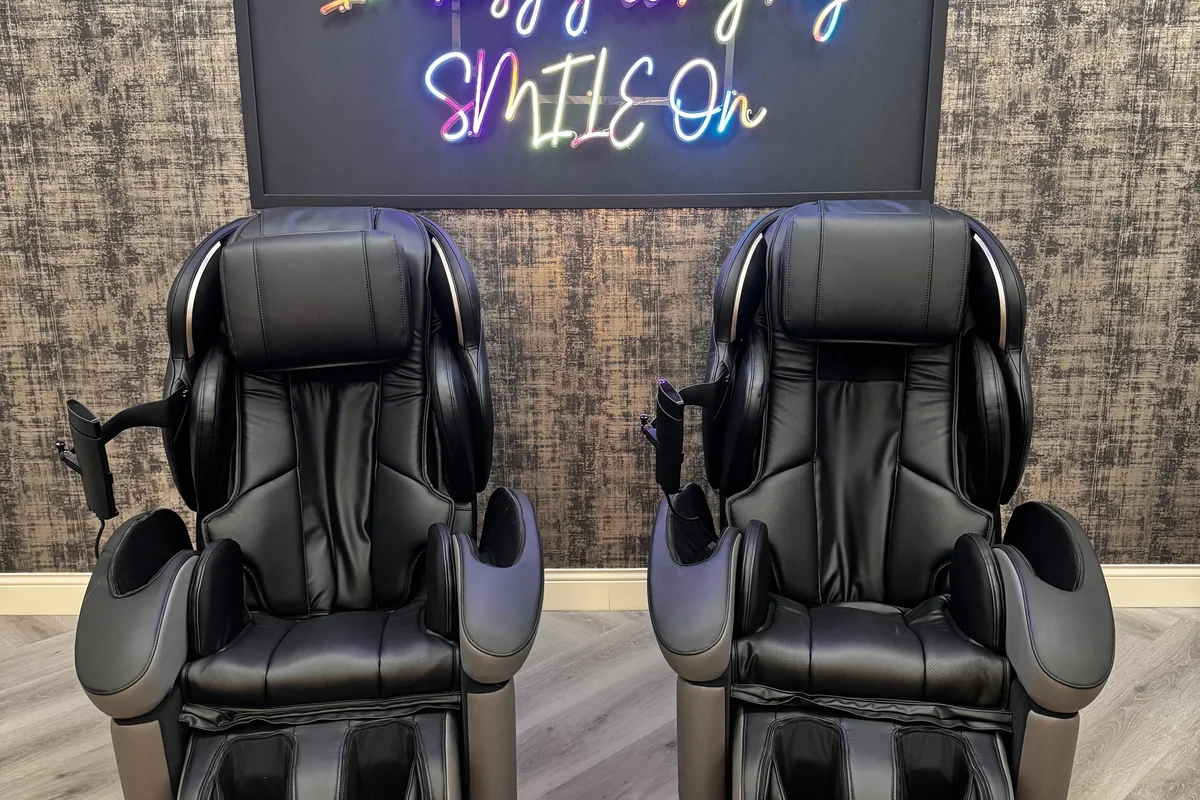
Comfort at TOOTHbar starts before the cleaning itself, with a studio designed to feel calmer and less clinical.
If you are looking for routine hygiene, a checkup, or you simply want to get back on track after some time away, the TOOTHbar appointment page includes a specific option for dental cleaning and checkup visits.
What You Do Between Cleanings Still Matters Most
AIRFLOW is useful technology, but it cannot replace daily home care.
A professional cleaning happens periodically. Biofilm starts forming again after you leave. That makes your everyday routine the part of oral hygiene you perform most often.
That combination of home care, professional hygiene and regular assessment is much more important than any single piece of equipment.
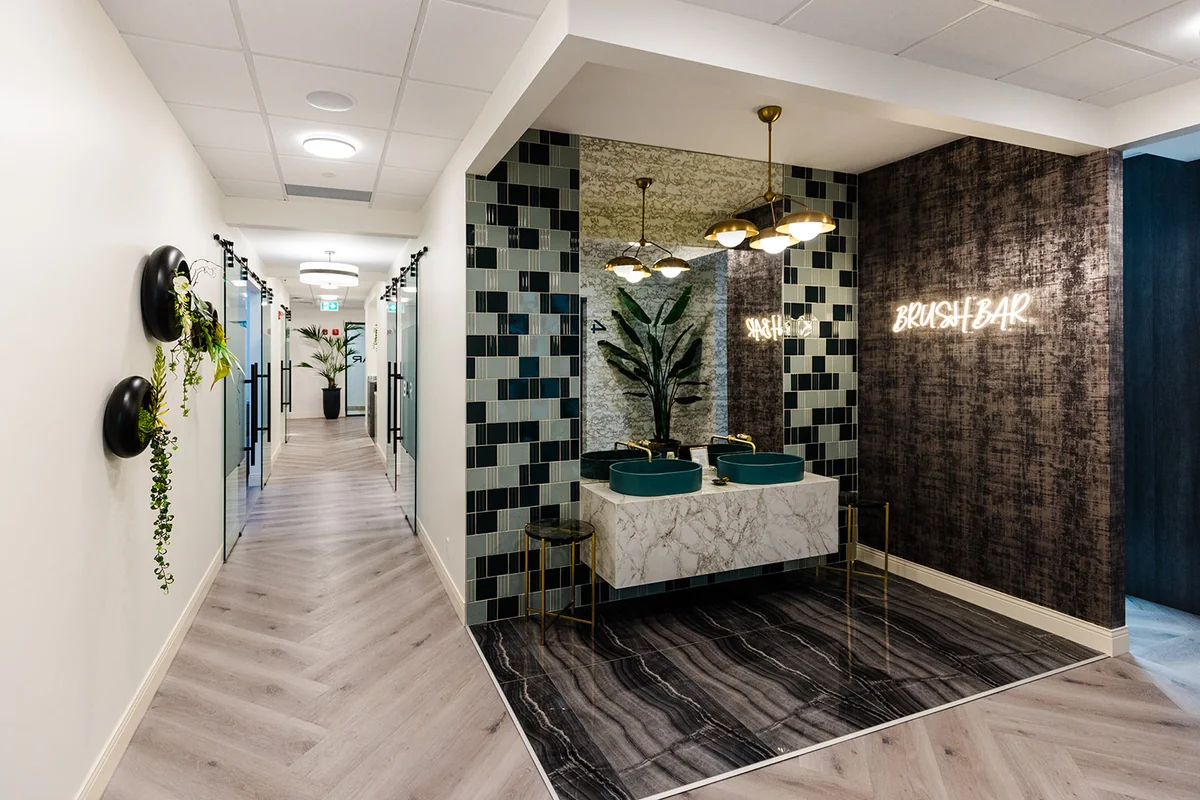
TOOTHbar is located at Suite #217, 6707 Elbow Drive SW in Calgary.
Frequently Asked Questions About AIRFLOW Dental Cleanings
What is AIRFLOW dental cleaning?
AIRFLOW is an air-polishing technology that uses a controlled stream of air, water and fine powder to remove indicated dental biofilm and extrinsic stain. At TOOTHbar it is used within a Guided Biofilm Therapy approach to professional hygiene.
Is AIRFLOW completely touchless?
The AIRFLOW portion uses an air-powder-water spray rather than scraping each surface with a hand instrument. However, a complete Guided Biofilm Therapy appointment may still include targeted ultrasonic or other instrumentation when hard calculus remains. It is more accurate to describe AIRFLOW as reducing unnecessary mechanical instrumentation rather than saying every cleaning is completely touchless.
Is AIRFLOW more comfortable than a regular cleaning?
Many patients find the AIRFLOW portion comfortable because biofilm and stain are removed with a controlled spray and the system can use warmed water. Individual comfort still varies depending on sensitivity, gum health, inflammation and the amount of calculus that needs to be removed.
Does AIRFLOW remove tartar?
AIRFLOW is primarily used for biofilm and stain and can address early deposits in appropriate situations. Harder calculus may still require targeted scaling with appropriate instrumentation as part of the Guided Biofilm Therapy protocol.
Can AIRFLOW clean around braces or dental implants?
EMS Guided Biofilm Therapy includes protocols and equipment designed for appropriate cleaning around orthodontic appliances, restorations and implant-related surfaces. Your hygienist selects the technique according to the surface and your individual clinical needs.
Does AIRFLOW whiten teeth?
AIRFLOW can remove many external surface stains, so teeth may look cleaner and brighter afterwards. It does not change the underlying natural shade of the teeth in the same way professional whitening treatment does.
How often should I have my teeth cleaned?
There is no single interval that is right for everyone. Your cleaning schedule should reflect your gum health, cavity risk, amount of calculus buildup, home care, dental appliances or restorations and other individual factors. Your dental team can recommend an appropriate recall interval.
What if I have not had a cleaning in several years?
You can still book a visit. The team will assess your current oral and gum health and explain what type of hygiene care is appropriate. Some people can return to routine maintenance, while others may need more involved periodontal cleaning first.
Ready for a different kind of dental cleaning?
Whether you are right on schedule or getting back into dental care after a long break, the first step is simply finding out what your mouth needs now. TOOTHbar combines AIRFLOW technology, Guided Biofilm Therapy and a comfort-focused environment to make preventive care feel more considered from start to finish.
TOOTHbar is a family-owned dental studio led by Dr. Murray Knebel in southwest Calgary. Book your cleaning or checkup online, start with a free video consultation if you have questions, or call the studio at 403-246-1002.